Published on
Reduce Machine Downtime with AI: A 2026 Operations Guide
TL;DR:
AI-driven predictive maintenance reduces unplanned machine downtime by up to 50% and lowers maintenance costs. It replaces fixed schedules with condition-based monitoring using sensors and machine learning, enabling faster, proactive repairs. Successful implementation requires careful planning, operator training, and organizational commitment.
AI-driven predictive maintenance is the most effective method to reduce machine downtime with AI and protect manufacturing output. Unplanned downtime costs can exceed $1,000,000 per hour in manufacturing. That number alone reframes every conversation about maintenance budgets. McKinsey & Company reports that AI predictive maintenance can cut equipment downtime by up to 50% and lower maintenance costs by 10–40%. The industry term for this approach is predictive maintenance, and it has moved from pilot project to production standard across leading plants in 2026.
What tools and technologies reduce machine downtime with AI?
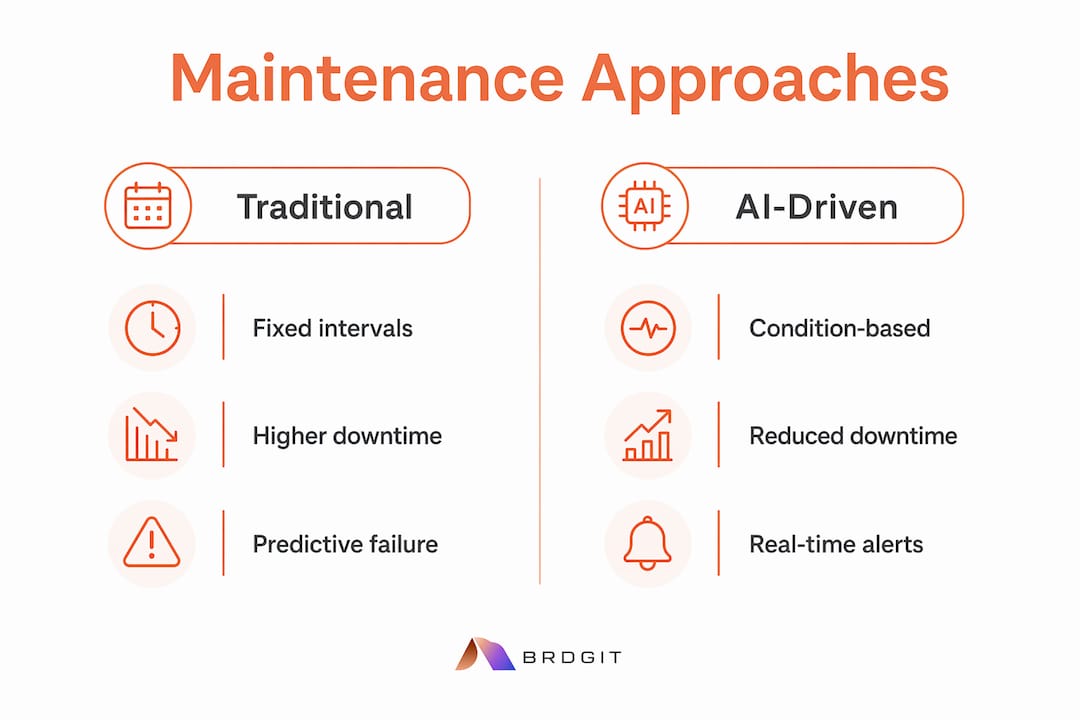
AI-powered maintenance works by replacing fixed service intervals with condition-based monitoring. Traditional calendar-based servicing misses hidden failures and wastes resources on equipment that does not yet need attention. AI schedules interventions based on actual machine condition, catching problems before they become stoppages.
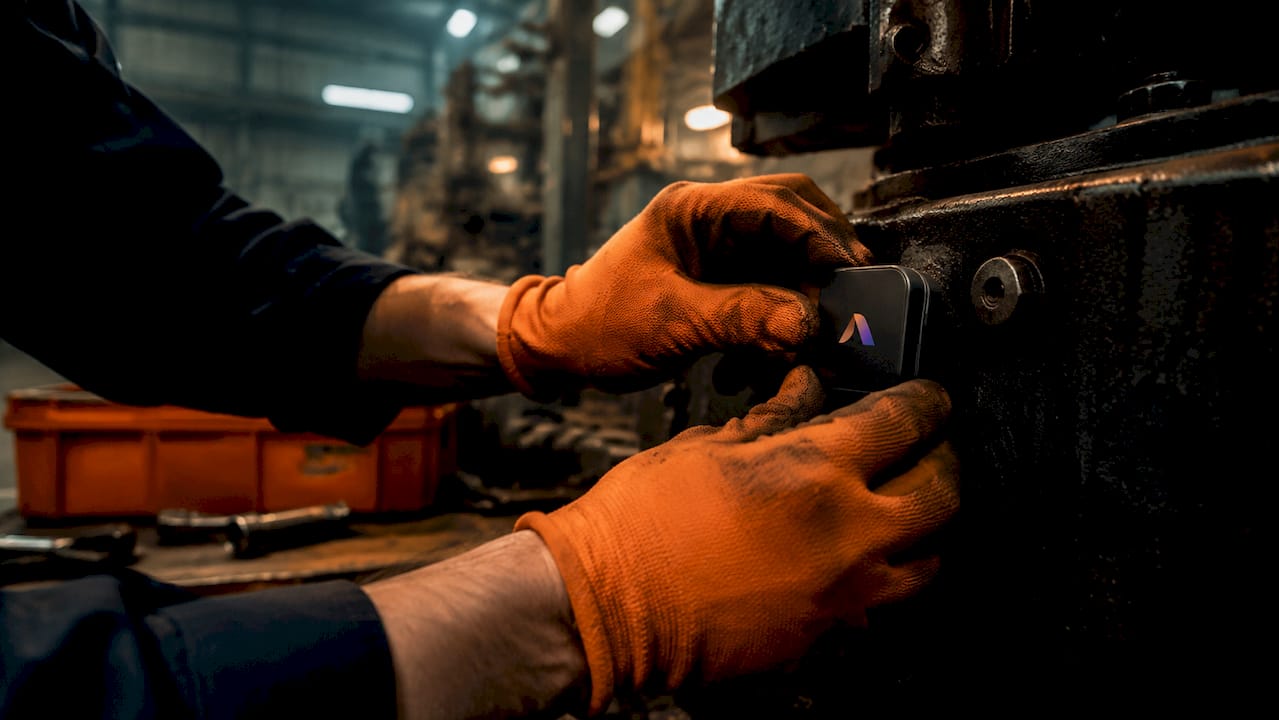
The core technology stack has three layers. IoT sensors monitor vibration, temperature, and electrical signals in real time. Machine learning algorithms analyze that data to detect anomalies and predict failure windows. Real-time dashboards then surface prioritized alerts so maintenance teams act on what matters most, not on noise.
Approach | Trigger | Failure detection | Cost profile |
|---|---|---|---|
Traditional preventive | Fixed calendar interval | Reactive only | High labor, over-servicing |
Condition-based monitoring | Sensor threshold breach | Early warning | Moderate, requires tuning |
AI predictive maintenance | Continuous ML anomaly detection | Predictive, root-cause guided | Lower long-term, fast ROI |
Wireless sensor platforms connect to existing systems with minimal disruption, which removes the most common excuse for delayed deployment. You do not need a full infrastructure overhaul to start.
Pro Tip: Start with sensors on your three highest-criticality machines. Prove the model works there before scaling across the floor.
How to implement AI predictive maintenance step by step
A structured rollout separates teams that see results within months from those that stall in pilot purgatory. The steps below reflect what actually works in manufacturing environments.
Assess critical equipment. Map every machine by failure impact and production dependency. Prioritize assets where a single failure stops a line or triggers a costly repair.
Gather baseline data. Run sensors for two to four weeks before activating any AI model. The model needs clean historical data to learn what “normal” looks like for each machine.
Install sensors and connect platforms. Choose wireless sensors that integrate with your existing SCADA or MES systems. Avoid solutions that require proprietary hardware ecosystems with no open API.
Train your operators and maintenance teams. AI tools fail when the people using them do not trust or understand the alerts. Training factory staff on how to interpret AI guidance is not optional. It is the difference between adoption and abandonment.
Configure anomaly detection thresholds. Work with your AI vendor or implementation partner to set alert sensitivity. Thresholds set too low flood teams with false alarms. Thresholds set too high miss real failures.
Establish response workflows. Define who receives each alert, what the escalation path looks like, and how root-cause findings get documented. Without a workflow, alerts become noise.
Monitor, tune, and scale. Review alert accuracy monthly for the first quarter. Adjust thresholds as the model learns. Once the pilot area shows measurable results, expand to the next equipment group.
Pro Tip: Assign one internal AI champion per shift. That person becomes the bridge between the platform’s output and the maintenance team’s daily decisions.
The 2026 shift in manufacturing AI adoption has made implementation faster and cheaper than it was three years ago. Deployment timelines that once took six months now run in six to eight weeks for mid-sized plants.
What ROI and measurable benefits should you expect?
The financial case for AI-driven machine efficiency is no longer theoretical. Real plants are posting real numbers.
ArcelorMittal used AI condition monitoring to detect 27 failures ahead of time, preventing 31 hours of downtime across critical production lines.
Worthington Steel deployed AI-powered vibration and oil analysis, reducing machine downtime by 18% and cutting rework by 17%.
Bosch’s agentic AI system accelerated error analysis up to ten times faster, generating annual savings of approximately €850,000 per plant.
One manufacturer prevented a critical failure and saved $5.3M in 30 days, with a payback period under six months.
AI also extends equipment life. Industry experts report that predictive maintenance increases machine lifespan by up to 40%. That figure changes the capital expenditure conversation entirely. You are not just avoiding repair costs. You are deferring equipment replacement by years.
For a structured view of how to calculate these returns, the enterprise AI ROI framework from GMD Automation offers a practical methodology for operations leaders building the business case.
How to troubleshoot common AI maintenance challenges
The most common failure mode in AI maintenance programs is not technical. It is organizational. Teams deploy the platform, get flooded with alerts, and quietly stop checking the dashboard.
Alert fatigue is the primary reason AI maintenance programs lose operator trust. Overtuned anomaly thresholds generate false alarms. False alarms teach operators to ignore the system. The fix is deliberate threshold calibration, not more alerts.
The second challenge is treating AI as a replacement for human judgment. AI operates best as a digital teammate that clusters related alerts and provides root-cause guidance. It reduces noise. It does not eliminate the need for experienced technicians who understand machine context.
Key practices to sustain AI maintenance performance:
Review alert accuracy weekly for the first 90 days and adjust thresholds based on confirmed outcomes.
Maintain sensor hardware on a quarterly inspection schedule. Dirty or misaligned sensors produce bad data, and bad data breaks the model.
Document every confirmed failure and near-miss in the AI platform. That feedback loop improves prediction accuracy over time.
Address operator adoption issues before they become cultural resistance. If your team has the tools but is not using them, the problem is rarely the technology.
Data quality is the foundation. AI does not forgive organizational ignorance about sensor maintenance.
Key Takeaways
AI predictive maintenance is the most effective way to cut unplanned equipment stoppages, with documented reductions of up to 50% in downtime and up to 40% in extended machine life.
Point | Details |
|---|---|
Financial stakes are high | Unplanned downtime can exceed $1,000,000 per hour, making early AI investment a clear priority. |
Condition-based beats calendar-based | AI schedules maintenance on actual machine state, preventing both over-servicing and hidden failures. |
Implementation follows a clear sequence | Assess, instrument, train, configure, and tune before scaling to avoid pilot stall. |
ROI arrives fast | Payback periods under six months are documented across multiple real-world deployments. |
Human expertise stays central | AI provides prioritized guidance; experienced technicians make the final call and close the loop. |
What I’ve learned about AI and machine downtime in practice
The plants that get the most from AI maintenance programs share one trait: they treat the technology as a tool for their people, not a replacement for them. Every time I see a deployment struggle, the root cause is the same. The AI is working. The operators are not using it. That gap is a training and culture problem, not a software problem.
The numbers from Bosch, ArcelorMittal, and Worthington Steel are real. But those results did not come from installing sensors and walking away. They came from teams that invested in operator engagement, tuned their models continuously, and treated every confirmed alert as a learning event. The technology is mature enough in 2026 that the limiting factor is almost always organizational readiness, not capability.
My honest recommendation: start smaller than you think you need to. One production line, three machines, one shift team. Get one confirmed save. That save becomes the internal proof of concept that unlocks budget and buy-in for the rest of the floor. AI does not require a leap of faith. It requires a first step taken seriously.
— Team BRDGIT
BRDGIT’s fractional engineers accelerate AI maintenance programs
Manufacturing teams that want to move from concept to confirmed results without hiring a full-time AI team have a practical option. BRDGIT’s fractional engineering services place experienced AI implementation talent inside your operation on a flexible basis.

BRDGIT has supported manufacturing clients through AI readiness assessments, sensor deployment planning, model configuration, and operator training programs in 2026. The fractional model means you get senior-level expertise scoped to your actual project needs, not a retainer for work you do not need yet. If you are ready to move from curiosity to execution, BRDGIT can build the roadmap and run alongside your team until the results are on the board.
FAQ
What is AI predictive maintenance?
AI predictive maintenance uses machine learning and IoT sensor data to detect equipment anomalies before they cause failures. It replaces fixed service intervals with condition-based interventions, reducing unplanned stoppages.
How much can AI reduce machine downtime?
McKinsey & Company reports that AI predictive maintenance can reduce equipment downtime by up to 50% and lower maintenance costs by 10–40%, with payback periods documented at under six months.
What sensors does AI maintenance require?
Most platforms use wireless sensors that monitor vibration, temperature, and electrical signals. These connect to existing systems with minimal disruption and do not require replacing legacy equipment.
How do you prevent alert fatigue in AI maintenance programs?
Calibrate anomaly detection thresholds carefully and review alert accuracy weekly during the first 90 days. AI should cluster and prioritize alerts, not flood operators with every minor deviation.
How long does AI maintenance implementation take?
For mid-sized manufacturing plants, deployment timelines in 2026 typically run six to eight weeks from sensor installation to active monitoring, assuming baseline data collection begins immediately.