Published on
AI in Building Inspections: A 2026 Guide for Professionals
TL;DR:
AI in building inspections uses computer vision and automation to identify defects and generate reports more accurately and quickly. It enhances productivity, reduces safety risks, and supports detailed, georeferenced data collection, but requires organizational readiness and good data quality. Inspectors focus on technical judgment while AI handles repetitive tasks, making workflows more efficient and timely.
AI in building inspections is defined as the use of computer vision, machine learning, and automated reporting to identify structural defects, document conditions, and generate compliance reports faster and more accurately than manual methods. The industry term for this practice is AI-assisted inspection, and it covers both document review before construction begins and visual defect detection in the field. For building inspectors, property managers, and construction professionals, this technology is no longer experimental. It is a production-grade shift in how inspections get done, and the productivity numbers behind it are hard to ignore.
What is AI in building inspections, and how does it work?
AI-assisted inspection operates across two distinct categories. The first is document inspection, which uses AI to review drawings, specifications, and compliance documents before work begins. The second is visual field inspection, which applies computer vision models to photos, videos, and drone footage to detect defects in real time. Combining both approaches leads to proactive defect prevention and reactive defect detection, which is a meaningful upgrade over purely reactive inspection workflows.
The core technologies powering this shift include:
Computer vision: Models like YOLO and Detectron2 analyze photos and video to flag cracks, corrosion, stains, and moisture damage with high accuracy.
Machine learning: Pattern recognition algorithms classify defect types, track recurrence across inspection cycles, and prioritize findings by severity.
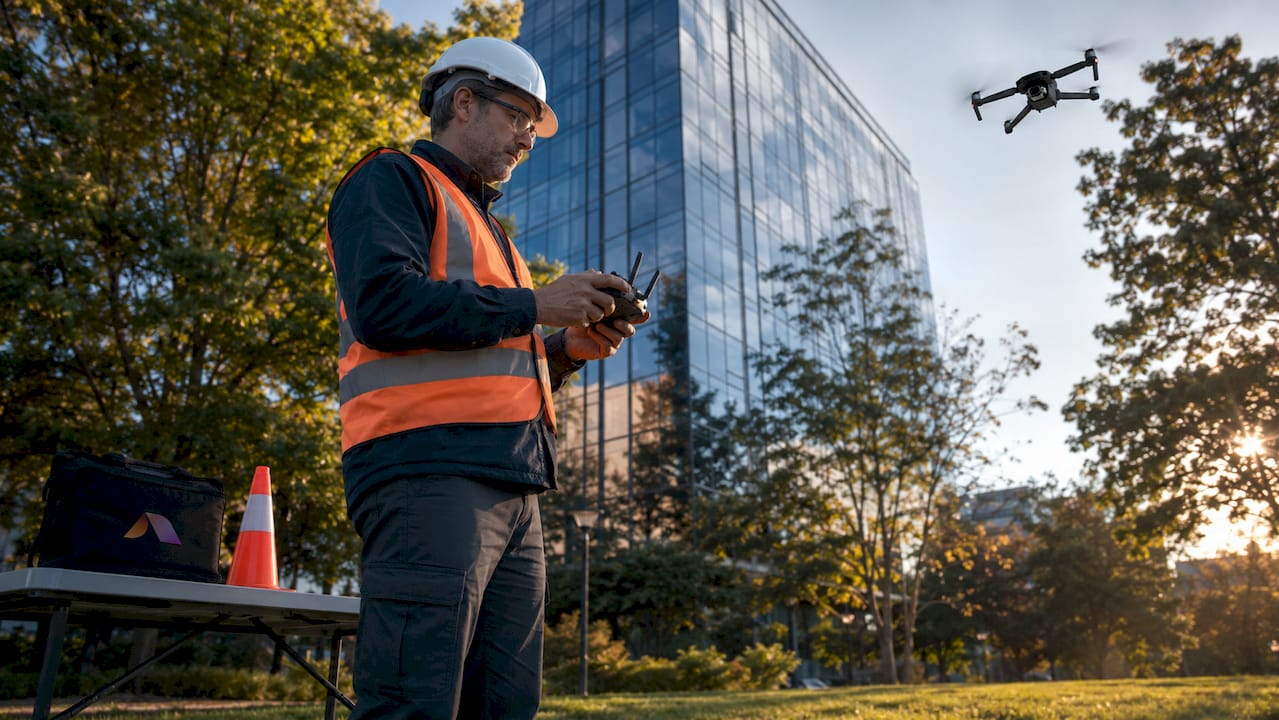
Drone data capture: Drones replace manual photography on facades, rooftops, and hard-to-reach areas, feeding high-resolution imagery directly into AI analysis pipelines.
Automated transcription: AI converts spoken walkthrough narration into structured report text, linking verbal observations to visual evidence automatically.
Pro Tip: When selecting an AI inspection tool, confirm it supports georeferenced image input. Random, unanchored photos limit what the AI can do with your data over time.
What are the key benefits of using AI in building inspections?

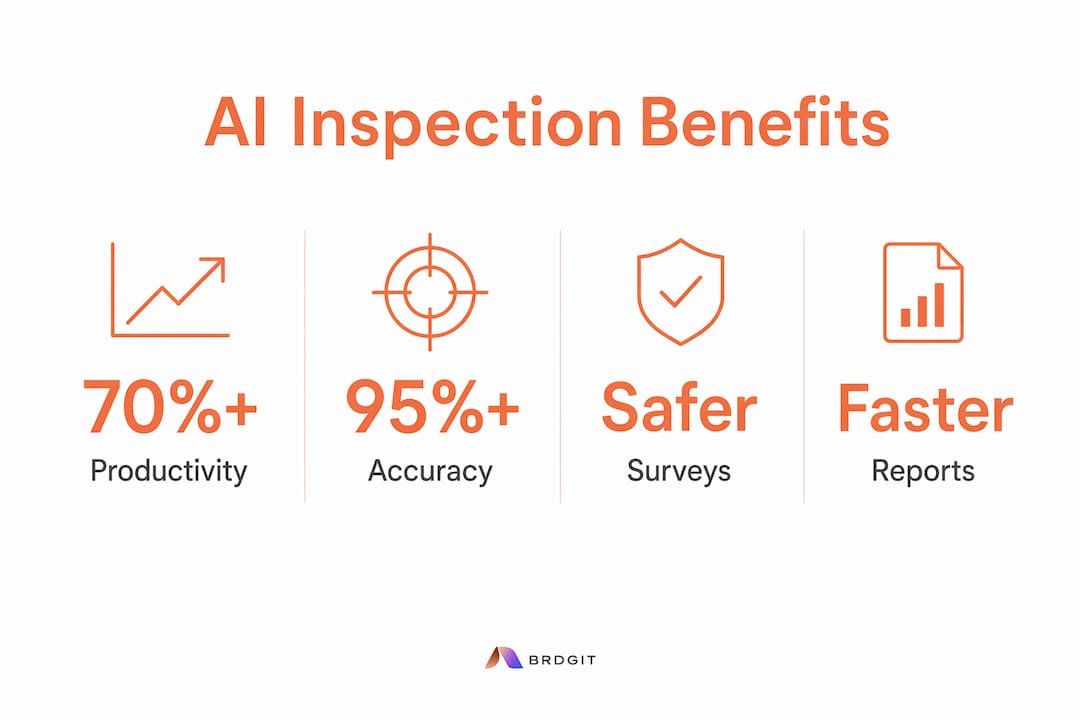
The productivity gains from AI-assisted inspection are documented and significant. AI-driven inspection platforms boost inspection productivity by over 70%, cut turnaround times by 90%, and identify 20% more defects than traditional methods. That last figure matters most. Missing a defect during an inspection is not just an efficiency problem. It is a liability and a safety risk.
AI also reduces the need for work at height. When drones handle facade and roof surveys, inspectors stay on the ground while the AI processes the imagery. That shift alone reduces incident exposure on high-rise and industrial sites.
Benefit | What it means in practice |
|---|---|
70%+ productivity increase | Inspectors cover more properties per day without sacrificing thoroughness |
90% faster report turnaround | Reports move from days to hours, enabling faster client decisions |
20% more defects detected | AI catches what tired eyes miss, especially in repetitive visual scans |
Reduced repeat site visits | Accurate first-pass documentation cuts costly return trips |
Compliance cross-referencing | AI maps findings to standards like PAS 79 and HHSRS automatically |
AI transcription services now achieve over 95% accuracy in converting spoken walkthrough notes to structured inspection reports, even in noisy site environments. That accuracy level means inspectors can narrate observations naturally while walking a property, and the system handles the rest.
How does AI change the role of human building inspectors?
AI does not replace building inspectors. It eliminates the work that wastes their time. AI takes over tedious tasks like manual data entry, frame extraction from video, and report formatting, which frees inspectors to focus on technical judgment and remediation decisions. That is where human expertise is irreplaceable.
The shift looks like this in practice:
Before AI: An inspector photographs a facade, manually sorts hundreds of images, writes notes by hand, and spends hours formatting a report.
After AI: The inspector walks the site with a camera or drone, narrates observations, and receives a structured, standards-aligned report within minutes.
What stays human: Interpreting ambiguous findings, making remediation calls, advising clients on risk, and signing off on compliance.
Concerns about job displacement are understandable but misplaced. AI is best viewed as an augmentation tool that lets inspectors dedicate their expertise to complex technical decisions rather than administrative tasks. The inspectors who adopt AI tools will outperform those who do not, not because AI is smarter, but because it removes friction.
Pro Tip: Start by automating one task, such as report generation or photo sorting, before attempting a full workflow change. Incremental adoption builds confidence and surfaces integration issues early.
What are practical AI workflows for building inspections?
The most effective AI inspection workflows in 2026 follow a video-first approach. Continuous video recording with narration allows AI to extract frames and transcribe notes automatically, replacing discrete photo capture and manual note-taking with a single, uninterrupted documentation pass.
For facade inspections, drones equipped with high-resolution cameras fly a programmed grid pattern and feed imagery into AI models that detect surface defects. The AI flags cracks, corrosion, and moisture intrusion, then anchors each finding to a location on the building’s digital model. Georeferenced, queryable data transforms individual snapshots into a searchable asset that compounds in value across inspection cycles.
Workflow element | Traditional method | AI-enhanced method |
|---|---|---|
Data capture | Manual photography, handwritten notes | Drone video, narrated walkthrough |
Defect detection | Visual scan by inspector | Computer vision model flags defects |
Report generation | Manual formatting, hours of work | Auto-generated, standards-aligned, under 15 minutes |
Compliance mapping | Inspector cross-references manually | AI maps findings to PAS 79, HHSRS automatically |
Repeat visits | Common due to missed defects | Reduced by thorough first-pass documentation |
Field teams that adopt AI tools in 2026 report measurable gains in both speed and accuracy. The combination of drone capture, computer vision analysis, and automated reporting creates a closed loop that traditional inspection workflows cannot match on cost or consistency.
Key Takeaways
AI-assisted inspection delivers its highest value when georeferenced data, computer vision analysis, and automated reporting work together as a single workflow rather than isolated tools.
Point | Details |
|---|---|
AI covers two inspection types | Document review and visual field inspection work best when combined for full defect coverage. |
Productivity gains are documented | AI platforms deliver over 70% productivity increases and detect 20% more defects than manual methods. |
Inspectors are augmented, not replaced | AI handles data entry and report formatting so inspectors focus on technical judgment. |
Spatial data quality determines AI value | Georeferenced images create searchable, cumulative assets; unanchored photos do not. |
Report speed enables on-site decisions | Reports generated within 15 minutes allow immediate remediation rather than deferred action. |
The uncomfortable truth about AI adoption in inspections
From where we sit at BRDGIT, the biggest obstacle to AI adoption in building inspections is not the technology. The technology works. The obstacle is organizational readiness, specifically the assumption that deploying an AI tool is the same as running an AI program.
We have seen inspection teams buy computer vision software, point it at their existing photo libraries, and wonder why the outputs are inconsistent. The answer is almost always data quality. Without spatial anchoring, AI outputs lack context and cumulative value. Garbage in, garbage out is not a cliché here. It is an operational risk.
The other mistake is trying to automate human judgment entirely. Attempting full automation risks overlooking the critical technical decisions that only experienced inspectors can make. AI is a force multiplier, not a substitute for expertise. The teams that get this right treat AI as infrastructure, not magic. They invest in data consistency, train their people, and keep humans in the loop for every consequential decision.
One more thing worth saying plainly: report latency under 15 minutes is not a nice-to-have. It is what separates passive documentation from active site management. If your AI tool cannot deliver a usable report while the inspector is still on site, you are not getting the full value of the investment.
— Team BRDGIT
BRDGIT’s fractional AI engineers for building inspections
Building inspection teams that want AI execution without a full-time hire have a direct path forward with BRDGIT.

BRDGIT’s fractional AI engineers work alongside your inspection team to identify the right AI opportunities, build data pipelines that support georeferenced capture, and implement automated reporting workflows aligned to standards like PAS 79 and HHSRS. You get experienced AI talent on demand, without the overhead of a full-time hire. If your team is ready to move from curiosity to execution, BRDGIT provides the roadmap and the people to get there.
FAQ
What is AI in building inspections?
AI in building inspections is the use of computer vision, machine learning, and automated transcription to detect defects, document site conditions, and generate compliance reports. It covers both pre-construction document review and on-site visual inspection.
How does computer vision detect building defects?
Computer vision models like YOLO and Detectron2 analyze photos and video footage to identify cracks, corrosion, stains, and moisture damage in real time or batch processing.
Does AI replace building inspectors?
AI does not replace inspectors. It automates data entry, photo sorting, and report formatting so inspectors can focus on technical judgment, remediation decisions, and compliance sign-off.
How accurate is AI transcription for inspection reports?
AI transcription services achieve over 95% accuracy in converting spoken walkthrough notes to structured reports, even in noisy construction environments.
Why does georeferenced data matter for AI inspections?
Georeferenced images anchor findings to specific building locations, making AI outputs searchable and cumulative across inspection cycles. Unanchored photos limit the analytical value of the AI system.